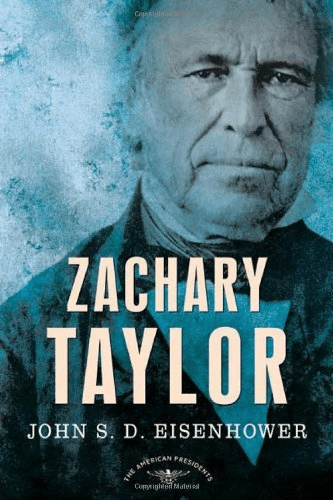
Taylor was born in Virginia in 1784, not far from the home of his distant cousin James Madison. His father was an officer in the Revolutionary War and was head of one of Virginia’s prominent families. However, his family moved to Kentucky shortly after he was born.
He was a wealthy plantation owner, a gentleman farmer, businessman, slave holder, and soldier. There were apparently skirmishes with Native Americans early in his career that are largely unreported. A lot about Taylor has been lost since his personal papers were destroyed in the Civil War (his son was a major general in the Confederate Army).
He joined the army in 1808 at the age of 23. Tensions with Britain were high at the time, though Jefferson avoided war. Taylor was assigned to serve under the incompetent General Wilkinson. While stationed near New Orleans, many soldiers died due to unsanitary conditions and spoiled food sold by corrupt contractors. When the army was moved upriver, the trip was deadly for the weakened men. Nearly all of the 2,000 troops were killed. Taylor survived because he got sick early on and was sent home to recover. While home recovering, he met his future wife Margaret Mackall Smith. They married in 1810. Their first daughter Ann was born the next year.
Tecumseh’s campaign against America due to Tippecanoe was blamed on the British and was one of the reasons for the War of 1812. During the War of 1812, Taylor was stationed at Fort Harrison in Indiana. He defended against a Native American attack while most of his men were sick and some deserted. It was the first American victory in the war. Madison made Taylor a brevet major, the first brevet awarded in US history.
Taylor engaged in a few skirmishes with Native Americans throughout 1812 but nothing major. He didn’t fight in 1813, engaging in recruitment and taking sick leave and commanding at Fort Knox which didn’t get attacked. Taylor tried to get transferred to where the fight was, but was unsuccessful.
In 1814, he was called to Missouri. At Credit Island, he was planning on burning down Native American villages, but was surprised when British troops showed up, causing him to retreat.
Taylor started a letter writing campaign to become a full major and got it, but then the war ended and he was reduced to the grade of captain again. He went to Washington to plead his case, but it didn’t work out, so he resigned his commission in 1815 to become a farmer.
He soon grew bored with farming, however. There was a vacancy in the grade of major by 1816 and Taylor accepted it. Taylor was a stern disciplinarian with his troops and didn’t get along with his superiors. Taylor had a façade of Southern courtesy, but also was judgmental and vindictive. He was promoted to lieutenant colonel and was given various assignments. He had four daughters at this time, but three-year-old Octavia and baby Margaret died of malaria in 1820.
He participated in the Black Hawk War in 1832, although he considered it unnecessary. The 65-year-old Sauk chief Black Hawk wanted to retake land whites had stolen in violation of treaties going back to 1804. He crossed the Mississippi with 1,500 Sauks but committed no acts of violence. When the army arrived, Black Hawk tried to surrender, but a trigger-happy militia man killed two or three of his emissaries. Fighting ensued and the whites retreated. Black Hawk then proceeded to raid white settlements all over the territory. The militia eventually defeated Black Hawk. Taylor didn’t take part in the fighting. He was responsible for holding down the fort.
Lieutenant Jefferson Davis, future president of the Confederacy, wanted to marry Taylor’s 18-year-old daughter Sarah, but Taylor was firm that no daughter of his would marry an army officer. Being an officer himself, he knew how hard it could be on a marriage. Forbidden from seeing each other, Sarah and Davis snuck around and wrote each other letters for years. Taylor grew to hate Davis. Davis resigned as an officer hoping to clear the air, but this didn’t work. When the two married, Taylor didn’t attend. Sarah died of malaria shortly after her marriage.
In 1837, Taylor received orders to participate in the Second Seminole War. One general after another had failed to defeat the Seminoles who disappeared anytime soldiers showed up. Taylor achieved victory at the Battle of Okeechobee. Even though he lost more men than the Seminoles, he got them to retreat. He earned some enemies by accusing the Missouri volunteers of cowardice. He got the rank of brevet to brigadier general and the nickname Old Rough and Ready because unlike other commanders, he was willing to march alongside his men. He even advanced through the swamp in muck up to his waist. He was put into command of all of Florida for two years, although, like his predecessors, he was unable to win.
He was then assigned to command Fort Gibson, the last stop on the Trail of Tears. He wrote a letter to President William Henry Harrison critical of Jackson and Van Buren and identified himself as a Whig.
Later, President Polk assigned Taylor to lead troops into Mexico in preparation for war. Although he’d spoken out against annexing Texas, Taylor was eager for war with Mexico because he wanted another promotion. On the way, Taylor ran into his former son-in-law Jefferson Davis. They no longer felt hostility for each other and separated on good terms.
Taylor almost never wore a proper uniform. Once a lieutenant went to his tent, found only an old man cleaning a saber and offered him a dollar to clean his own. When he returned, he was surprised to learn “Old Fatty” was the general himself who said, “I’ll take that dollar.”
It was unknown whether brevet ranks took precedence over regular ranks and this caused arguments over who outranked whom. During the march to Mexico, news reached the army that Polk had decided regular rank outranks brevet, which infuriated Colonel Worth (who was a brevet brigadier general). Worth left with the intention to resign, although he later returned.
When Taylor invaded Matamoros, he wanted the Mexican civilians to consider the Americans friends, so he camped his army outside of town, paid the vendors what they asked, even if they overcharged, and treated the Mexican wounded.
During the Mexican campaign, some of Taylor’s Irish and German troops deserted since they were treated like second-class citizens. While camped at Camargo, one eighth of his troops died of disease. Those who died were mostly volunteers since the regulars had discipline, cleanliness, and a better location. The Texas Rangers didn’t obey Taylor’s orders. They did things their own way and sometimes had different goals such as getting their bitter enemy Antonio Canales.
After his victory at Monterrey, Taylor was promoted to major general of the regular army. Polk was mad at him for offering a truce in exchange for Mexican troops evacuating the city, and ordered the truce ceased at once. Taylor got the message just four days before the truce was due to end anyway. In his rage, Taylor made the messenger deliver the news to the Mexican army.
Polk sent general-in-chief Scott to led the army to Mexico City. Taylor didn’t meet Scott when he arrived (perhaps a deliberate snub), so Scott took most of Taylor’s troops while he was absent. Taylor was furious, but reinforcements did arrive for him to lead as promised. He won a victory against President Santa Anna at Buena Vista.
Scott, also a presidential aspirant, achieved greater victories than Taylor on his march to Mexico City. Also hurting Taylor’s presidential aspirations was his refusal to identify himself as a Whig. He wanted to appeal to all voters. His wife didn’t want him to be president either, preferring a quiet, domestic life.
When Taylor returned home from Mexico, he was a celebrity. He was showered with medals, swords, sashes, and medallions. Songs were dedicated to him. Girls strewed flowers in his path. He was finally convinced to declare himself a Whig, albeit not an ultra Whig. He didn’t want to hold a Whig convention either as that would emphasize the fact he belonged to a party.
A convention was held anyway. Taylor was chosen to be the Whig candidate with Millard Fillmore of New York as vice president. Taylor didn’t get the news for a month because he’d told the postmaster he wouldn’t accept a letter with postage due. Some Whigs objected to Taylor for being a slave holder, but in order to win the election, they needed to appeal to slave holders.
After being elected at age 64, Taylor wanted to keep his army pay as long as possible, so he didn’t resign his commission until the day he left for Washington. His wife had made a promise to God to not make public appearances if her husband returned from Mexico, so the duties of White House hostess fell on Taylor’s daughter Betty who had just married Taylor’s aide William Bliss.
Taylor’s wife had also prayed for him to lose the election, but that was not to be. Taylor was the first man elected president who had not previously held a political office. Taylor had trouble picking a cabinet since he was a political outsider and it took him some time. He wanted to be president of all the people, so he didn’t make full use of prominent members of the Whig party or confide in members of the Whig Congress.
Outgoing President Polk described Taylor as a well-meaning old man, however he was uneducated, ignorant of public affairs, and would need to rely on his cabinet.
In Taylor’s inaugural address, he stated his intention to let Congress handle domestic issues. He also apparently said the newly acquired territories of Oregon and California were too far away to be states and should instead become countries of their own.
His early days in office were plagued by job seekers from off the street interrupting him. He attended the funerals of Polk and Dolley Madison (Taylor coined the term First Lady to describe her.)
Since his wife Margaret shunned public life, there were rumors that she was a reclusive pipe-smoking bumpkin, but the Taylors didn’t care. Taylor kept his informal manner, wearing large comfortable clothes rather than fashionable ones.
In 1849, the White House was close to marshes at the edge of the Potomac. It was hot and humid and the roof leaked. A cholera epidemic broke out and Taylor, not a particularly religious man, declared a day of prayer in July. Despite the fact large gatherings of people spread disease, Taylor took a trip to Pennsylvania and New York to familiarize himself with conditions in the North, an area of the country that was largely new to him.
He started experiencing vomiting and diarrhea in Harrisburg, but attributed this to a change of water and continued on. While there, he gave orders to blockade New Orleans and New York to prevent small private invasions (filibustering expeditions) from sailing to Cuba.
Taylor assured Northerners that slavery would not be expanded into the new territories. Though a slave holder himself, he was against slavery in principle. He wouldn’t abolish slavery in states where it already existed, but he wouldn’t expand it either.
He continued his tour, giving speeches to large crowds. Diarrhea and vomiting returned along with fever and the shakes near Erie. The doctor even thought it was serious enough to send word for his wife to come join him, but he recovered and continued his tour though New York. He was sick enough to cancel plans for Boston.
The South was pushing for a stronger Fugitive Slave Act, but Taylor was against it. Southerners also sent filibustering expeditions to the Caribbean and Central America to seize control of local governments hoping to bring new territories into the US as slave states.
When gold was discovered in California, soldiers and sailors deserted to become prospectors. Despite what was said on inauguration day, Taylor did want California to become a state. The people of California, the majority from slave-holding states, unanimously decided to make California a free state. The southerners in Congress didn’t like this and blocked California from becoming a state. The debate over California, which was really a debate over slavery, got so heated one senator drew a pistol on another.
New Mexico was also controversial since some Texans claimed Santa Fe was in their territory. Texas even threatened to secede from the Union and use military force to capture New Mexico, but Taylor called their bluff. According to later stories, he said if they did that, he’d lead the army against them himself and hang them as traitors. Like California, New Mexico also wanted to be admitted as a free state, but Congress blocked them.
The French minister in Washington, Guillaume Tell Poussin, thought he had special privileges and was a thorn in Taylor’s side. Taylor declared him persona non grata which irritated France. Taylor was even willing to go to war over the issue, but Secretary of State Clayton smoothed things over.
Cuba was part of Spain at the time. Narciso López, a former officer in the Spanish army, lost his land for some reason and fled to the US where he planned an invasion of Cuba to get his land back as well as the rest of the island. 600 men were ready to go. One of his supporters was John Quitman, the governor of Mississippi. Taylor put a stop to López’s first filibuster.
López tried again and was captured, but was acquitted by friendly southern jurors. About 50 men with him were captured by Spain which was going to execute them as pirates. Taylor defended the prisoners since they hadn’t actually committed a crime, they’d only intended to commit a crime. He got them released.
Taylor’s last official act was signing the Clayton-Bulwer Treaty with England which prevented either country from controlling the Panama Canal. The treaty prevented a war (although a war was unlikely), but kept the Panama Canal from being built for the foreseeable future.
Taylor’s last days were plagued by the Galphin scandal. Galphin was owed $43,000 but died before he was paid. His heirs got the money, but also wanted interest. Two of Taylor’s cabinet members awarded the unthinkable sum of $191,000 to the heirs. On top of that, the agent for the heirs (a third member of Taylor’s cabinet) got half the sum. This caused Taylor a lot of stress and made his administration look corrupt.
On July 4th, 1850, Taylor attended the ceremony laying the cornerstone for the Washington Monument. He became sick, but it didn’t seem that serious. Washington’s water and sewer systems were still primitive and many other prominent politicians were sick as well. In his final days, he signed the Clayton-Bulwer Treaty and was censured by Congress for the Galphin scandal. There were even calls for his impeachment. He died on July 9th from a stomach illness. He was only president for 16 months. He was the last president to own slaves while in office.
I’ve been reading through presidential biographies with the intention to rank presidents based on how many deaths they contributed to while president. Taylor undoubtedly caused some people to die by taking a tour of the North and giving speeches in front of large crowds during a cholera epidemic. Everyone knew large crowds cause disease to spread. Taylor didn’t intend to kill anybody of course, but his decision to go on a speaking tour during an epidemic was reckless and resulted in deaths whether he intended it or not.
On the plus side, he saved lives during the López Affair by ordering a blockade preventing the invasion of Cuba by a group of private individuals. He also kept Spain from executing about 50 of the pirates. He also stood up to Texas when they threatened to invade New Mexico, which saved lives as well.
He was opposed to expanding slavery into California and New Mexico and wanted them admitted as free states, but Congress blocked this. The Clayton-Bulwer Treaty may have prevented war with England over the proposed Panama Canal, although war between the two nations was unlikely due to how economically tied together they were.
 Mania Delight