
Do Androids Dream of Electric Sheep? by Philip K. Dick

The novel Do Androids Dream of Electric Sheep? is similar to the movie Blade Runner which was based on it, but also very different. Rick Deckard is married rather than single and surprisingly, owns an electric sheep. Since animals are nearly extinct, owning one is a status symbol. Those who can’t afford a real animal, buy electronic facsimiles. Due to the lack of animals, everyone on earth is a vegetarian through necessity and eating meat is considered atrocious.

Deckard, like most men, wears a lead codpiece to keep the radiation in the atmosphere from making him infertile. Most humans have left for the colonies, so Earth is nearly empty. Radiation has turned some people into mutants called specials. (In addition to Deckard, the other major viewpoint character is John Isidore, a special with diminished mental capacity who’s not allowed to go to the colonies.)

Continue reading
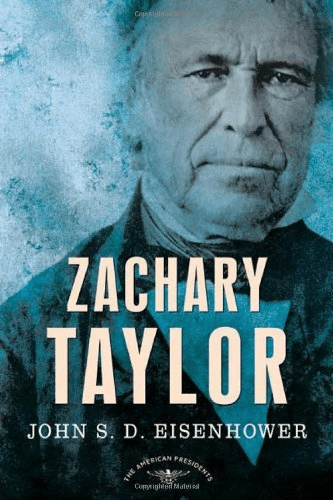
Zachary Taylor by John S. D. Eisenhower

Taylor was born in Virginia in 1784, not far from the home of his distant cousin James Madison. His father was an officer in the Revolutionary War and was head of one of Virginia’s prominent families. However, his family moved to Kentucky shortly after he was born.

He was a wealthy plantation owner, a gentleman farmer, businessman, slave holder, and soldier. There were apparently skirmishes with Native Americans early in his career that are largely unreported. A lot about Taylor has been lost since his personal papers were destroyed in the Civil War (his son was a major general in the Confederate Army).

Continue reading

Good News Friday

  • Maharashtra becomes first state in India to introduce universal healthcare policy. Hindustan Times.
  • Iraq eliminates trachoma as a public health problem. WHO.
  • Once nearing exinction, Brazil’s golden lion tamarins have rebounded from 200 monkeys in the 1970s to around 4,800 today. AP.
  • 18 countries have abolished the death penalty in the last ten years. ES Euro.
  • 16 million less children suffered from stunting in India in 2022 compared to 2012. Times of India.
  • Fatal heart disease in the United States dropped about 4% a year between 1990 and 2019. American Heart Journal.
  • Shootings in New York are down 26% this year, and the murder rate has declined by 11%. New York Times.
  • Number of Mexicans in poverty declined by 8.9 million from 2020–2022. Mexico News Daily.
  • Between 2005 to 2021, particulate emissions in Europe fell by 27%, and emissions of sulphur dioxide fell by 80%. European Environment Agency.
  • Large majority of EU countries will hit 2030 solar targets ahead of schedule. Politico.
  • India succeeds in reducing emissions rate by 33% over 14 years. Reuters.

For more good news, check out The Progress Network, and Future Crunch.

Good News Friday

  • In India, over 135 million people were lifted out of multi-dimensional poverty between 2015 to 2021. NITI (PDF link).
  • Egypt used to have the highest rate of hepatitis C in the world. In 2018, the government decided to implement a campaign to screen and treat every citizen. Today, Egypt has eliminated hepatitis C from its entire population. Forbes.
  • In the last 12 months, an NGO called Evidence Action has installed over 24,000 new chlorine dispensers in Uganda and Malawi, providing 9.8 million people with access to safe water. Evidence Action.
  • Connecticut has not only cut its number of imprisoned people in half, but it has been able to close more than ten prisons while keeping its crime rate at its lowest level in more than 40 years. Slate.
  • Ant Forest, a mobile app game in China, is responsible for the planting of over 400 million trees. China Daily.
  • Maryland has repopulated more than 10 billion oysters in the Chesapeake since 1994, improving water quality, and providing a welcome habitat for other marine life. Washington Post.
  • Since 2021, eleven states have passed child tax credits that include the lowest-income families with no reported labor income, many with bipartisan support. Jain Family Institute.

For more good news, check out The Progress Network, and Future Crunch.

Good News Friday

  • HIV treatment averted almost 21 million AIDS-related deaths between 1996 and 2022. UNAIDS (PDF link).
  • America’s gender pay gap has shrunk to an all-time low. CBS News.
  • Solar installations in Brazil have created around 960,000 jobs and offset 40.6 million tons of carbon dioxide emissions since 2012. Renewables Now.
  • In the first half of this year, wind and solar generated more power than coal in the United States. Canary.
  • Bhutan and Timor-Leste eliminate rubella. WHO.
  • The number of poor people in Cambodia was halved from 5.6 million to 2.8 million in the last 8 years. The Star.
  • Sierra Leone is the latest country to expand free education for children as legal right to free education grows globally. Human Rights Watch.
  • Since joining the Built for Zero program in 2015, Detroit has reduced veteran homelessness by approximately 60 percent. Reasons to be Cheerful.

For more good news, check out The Progress Network, and Future Crunch.

Good News Friday

  • Between 1990 to 2019, the share of the global population living in extreme poverty dropped from 38% to 8.5%. World Bank.
  • 25 countries halved multidimensional poverty within 15 years. UNDP.
  • Deforestation in Colombia fell 29% last year. The Guardian.
  • New rapid malaria test: A breakthrough by Angolan twins. DW.
  • Philadelphia’s eviction diversion program kept thousands housed. New York Times.
  • How a simple tag helped India save fuel worth $8.4 billion. Rest of World.

For more good news, check out The Progress Network, and Future Crunch.

Good News Friday

  • Trials have shown dementia drugs donanemab and lecanemab slowed cognitive decline by 35% and 27% respectively. The Guardian.
  • Cambodia has reduced its maternal mortality rate from 810 per 100,000 live births in 2008 to 154 per 100,000 live births in 2021-2022. During the same time, under-five mortality has fallen from 55 to 16 per 1,000 live births, and overall life expectancy has risen from 61 and 64 years to 74.3 and 76.8 years for men and women, respectively. Khmer Times.
  • Saudi Arabia introduced a set of legal reforms which increased women’s labor force participation from 22 percent in 2019 to almost 37 percent today. Arab News.
  • ‘Knock Knock’ enables victims of domestic violence in South Korea to report abuse to the police with just two taps on their smartphone. It shares the victim’s location and allows them to stream evidence to the police live. LBB.
  • 4ocean has recovered 30 million pounds of plastic waste and man-made debris from the world’s oceans, rivers, and coastlines since the company began in 2017. Oceanographic.

For more good news, check out The Progress Network, and Future Crunch.

Good News Friday

  • Between 2000 and 2022, 2.1 billion people gained access to safe drinking water and 2.5 billion gained access to safely managed sanitation. WHO (PDF link).
  • Globally, deaths from drowning decreased by 44.5% between 1990 and 2017. BMJ.
  • In the United States, child poverty has been reduced by 40%, and the gains made by low-wage workers have reduced income disparity by 25%. Prospect.
  • Low emission zones in cities have reduced heart and circulatory problems, resulting in an estimated health cost savings of €4.4 billion. The Guardian.
  • Wind and solar saved consumers in Texas approximately $11 billion in 2022. PV Magazine.

For more good news, check out The Progress Network, and Future Crunch.

Polk: The Man Who Transformed the Presidency and America by Walter R. Borneman

James Knox Polk was born in 1795 in a log cabin in North Carolina, within twenty miles of Andrew Jackson, who was 28 years older. His family was Presbyterian, but his grandfather became a deist and Polk himself wasn’t baptized due to his father getting into an argument with the local minister. His family moved to Tennessee in 1806.

Young James was sickly due to urinary stones. In 1812, when he was 17, he survived surgery to remove the stones. He started attending the University of North Carolina when he was 20. At the time, the university was staffed by a single administrator, a single professor, and a few tutors. He graduated in 1818, but was too frail to travel home right away.

Continue reading

The Far Reaches

The Far Reaches is a collection of six short stories available for free for Amazon Prime subscribers. All of the stories take place in space. Colonization is a theme in half the stories. We get a wide variety of narrators including an AI, an alien, a human raised by aliens, and a clone. There’s a cozy science fiction story and an engaging murder mystery aboard a space ship. They’re all written by famous science fiction writers. I liked all of them, but my favorites are the stories by Rebecca Roanhorse, Veronica Roth, and James S. A. Corey.

Continue reading