Good News Friday

  • Renewables set to overtake coal as the world’s largest source of electricity by 2024. IEA (PDF link).
  • World record: Wind turbine generates enough energy in a day to power 170,000 homes. Euronews.
  • 15% of world auto sales are electric vehicles. Clean Technica.
  • A Canadian study gave $7,500 to homeless people. The results show the power of cash transfers to reduce homelessness. Vox.
  • Within a decade of implementing stricter laws, monthly drunk-driving injuries in Taiwan fell by nearly 40 percent, and monthly alcohol-related traffic deaths dropped by more than 80 percent. Think Global Health.
  • Punjab, home to over half of Pakistan’s population, has doubled school enrollment from 13 million to 26 million students between 1998 and 2020. World Bank.
  • China’s ‘war against pollution’ over the past decade has led to a 42% drop in pollution levels since 2013. This remarkable progress has added 26 months to the average Chinese citizen’s lifespan. CNN.
  • Drones help boost immunization rates in remote parts of Ghana. VaccinesWork.
  • Scotland is planning a transition to a 4-day workweek for civil servants and wants the private sector to follow suit. Fortune.
  • Peregrine falcons, once extremely endangered, now stable in Iowa skies. The Gazette.
  • Tantalising sign of possible life on faraway world. BBC.

For more good news, check out The Progress Network, and Future Crunch.

Again, Dangerous Visions edited by Harlan Ellison

Again, Dangerous Visions, published in 1972, was the follow up to the successful anthology Dangerous Visions. Each story has an introduction written by Ellison and an afterword written by the author. In some cases, the introduction and afterword are longer than the story itself.


In many of the introductions, Ellison tells us a third anthology in the series titled The Last Dangerous Visions is going to be published soon, and even shares the names of some of the authors who will appear. Alas, this third volume was never published during his lifetime. I get the impression Ellison wanted to include every prominent science fiction author of the time in these three volumes, but wasn’t able to pull it off since new writers kept coming along. (Ellison’s executor, J. Michael Straczynski, announced plans to publish a slimmed-down version of The Last Dangerous Visions in 2020, but it still hasn’t seen the light of day as of this writing.)

Continue reading →

Good News Friday

  • Schoolkids in 8 US states can now eat free school meals, advocates urge Congress for nationwide policy. AP.
  • The poverty rate in Bangladesh declined by 5.6% between 2016 to 2022, lifting almost ten million people out of poverty. Bangladesh Bureau of Statistics (PDF link).
  • Violent deaths in Brazil reach lowest number in 12 years. Fohla De S.Paulo.
  • Montreal adds nine more car-free streets after ‘mind blowing’ success. Energy Mix.
  • Ocean cleanup group removes record 25,000 pounds of trash from Great Pacific Garbage Patch in one extraction. ABC News.
  • A family-run environmental organisation in Indonesia called Sungai Watch has successfully removed 1.2 million kilograms of plastic from polluted rivers and mangroves. Mongabay.
  • The takahē, a large, flightless bird once thought to be extinct, returns to New Zealand wild. The Guardian.
  • After 90% of the wild population was wiped out by disease, the Tasmanian devil breeding program in New South Wales has produced its 500th joey. ABC.
  • Renewables generated 25% of US power in the first half of 2023. Electrek.
  • The price of solar modules has reached a record low of $0.15 per watt. pvxchange.
  • South Africa, the world’s most coal-dependent economy, has been installing enormous amounts of solar. Bloomberg.
  • Mozambique has connected half a million people to tap water. The World Bank.
  • Young adults in U.S. drink less alcohol than in prior decades. Gallup.
  • Electrified cement could turn houses and roads into nearly limitless batteries. Science.
  • Smart contact lens battery charged by human tears. Interesting Engineering.

For more good news, check out The Progress Network, and Future Crunch.

Star Trek: Voyager

There’ve been a lot of episodes of Star Trek over the years. Over the course of 12 television series, there are currently 890 episodes in total. I now hold the dubious distinction of having watched all 890 of those episodes.

I watched quite a bit of Voyager when it was originally on the air, but live TV being what it is, I missed several episodes, especially in the later seasons. So I hadn’t watched every episode of Voyager until recently. With 172 episodes, it’s a lot. Many of the episodes were fun, but there were many filler episodes as well that I struggled to get through.

Continue reading →

Good News Friday

  • Polio has nearly been eradicated. Nature.
  • 30 million more children have access to school meals than in 2020. World Food Programme (PDF link).
  • US murder rates in 2023 are down nearly 13%. Jeff-alytics.
  • The number of people without access to electricity has fallen from 1.1 billion in 2010 to 675 million today. Energy Progress Report (PDF link).
  • The Okaloosa darter, a tiny two-inch fish, is no longer an endangered species. US Fish & Wildlife Service.
  • The amount of global renewable capacity rose by 13% last year and this year it’s expected to jump by a third. IEA.
  • Stanford University scientists have invented a new kind of paint that can keep homes and other buildings cooler in the summer and warmer in the winter, significantly reducing energy use, costs, and greenhouse gas emissions. Stanford News.
  • Colony collapse disorder has been managed. There are now more honey bees on the planet than there have ever been in human history. New York Times.
  • Bali rice experiment cuts greenhouse gas emissions and increases yields. Mongabay.

For more good news, check out The Progress Network, and Future Crunch.

Millard Fillmore by Kevin J. Law

Millard Fillmore was born in 1800 in a log cabin to a poor tenant farmer in New York. He was named Millard after his mother’s maiden name. His father and uncle had been sold a land title sight unseen. The land turned out to be hard clay not good for farming. On top of that, the title was faulty and they lost the land. They ended up moving a few miles south where the land wasn’t much better.

Fillmore grew up doing farm chores. He had four brothers and four sisters. His father considered hunting and fishing (“sporting”) to be a waste of time. When Fillmore was 14, he was apprenticed to an ill-tempered cloth maker. He quit after 4 months, but his father found him another cloth-making apprenticeship that he stayed at for years.

Continue reading →

Do Androids Dream of Electric Sheep? by Philip K. Dick

The novel Do Androids Dream of Electric Sheep? is similar to the movie Blade Runner which was based on it, but also very different. Rick Deckard is married rather than single and surprisingly, owns an electric sheep. Since animals are nearly extinct, owning one is a status symbol. Those who can’t afford a real animal, buy electronic facsimiles. Due to the lack of animals, everyone on earth is a vegetarian through necessity and eating meat is considered atrocious.

Deckard, like most men, wears a lead codpiece to keep the radiation in the atmosphere from making him infertile. Most humans have left for the colonies, so Earth is nearly empty. Radiation has turned some people into mutants called specials. (In addition to Deckard, the other major viewpoint character is John Isidore, a special with diminished mental capacity who’s not allowed to go to the colonies.)

Continue reading →

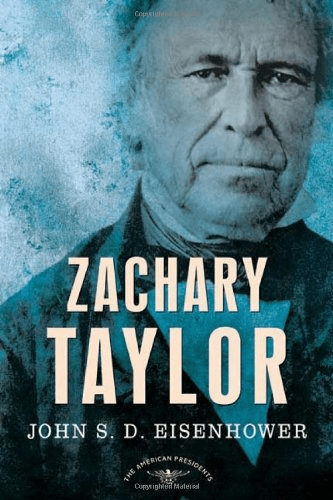
Zachary Taylor by John S. D. Eisenhower

Taylor was born in Virginia in 1784, not far from the home of his distant cousin James Madison. His father was an officer in the Revolutionary War and was head of one of Virginia’s prominent families. However, his family moved to Kentucky shortly after he was born.

He was a wealthy plantation owner, a gentleman farmer, businessman, slave holder, and soldier. There were apparently skirmishes with Native Americans early in his career that are largely unreported. A lot about Taylor has been lost since his personal papers were destroyed in the Civil War (his son was a major general in the Confederate Army).

Continue reading →

Good News Friday

  • Maharashtra becomes first state in India to introduce universal healthcare policy. Hindustan Times.
  • Iraq eliminates trachoma as a public health problem. WHO.
  • Once nearing exinction, Brazil’s golden lion tamarins have rebounded from 200 monkeys in the 1970s to around 4,800 today. AP.
  • 18 countries have abolished the death penalty in the last ten years. ES Euro.
  • 16 million less children suffered from stunting in India in 2022 compared to 2012. Times of India.
  • Fatal heart disease in the United States dropped about 4% a year between 1990 and 2019. American Heart Journal.
  • Shootings in New York are down 26% this year, and the murder rate has declined by 11%. New York Times.
  • Number of Mexicans in poverty declined by 8.9 million from 2020–2022. Mexico News Daily.
  • Between 2005 to 2021, particulate emissions in Europe fell by 27%, and emissions of sulphur dioxide fell by 80%. European Environment Agency.
  • Large majority of EU countries will hit 2030 solar targets ahead of schedule. Politico.
  • India succeeds in reducing emissions rate by 33% over 14 years. Reuters.

For more good news, check out The Progress Network, and Future Crunch.
Good News Friday

  • In India, over 135 million people were lifted out of multi-dimensional poverty between 2015 to 2021. NITI (PDF link).
  • Egypt used to have the highest rate of hepatitis C in the world. In 2018, the government decided to implement a campaign to screen and treat every citizen. Today, Egypt has eliminated hepatitis C from its entire population. Forbes.
  • In the last 12 months, an NGO called Evidence Action has installed over 24,000 new chlorine dispensers in Uganda and Malawi, providing 9.8 million people with access to safe water. Evidence Action.
  • Connecticut has not only cut its number of imprisoned people in half, but it has been able to close more than ten prisons while keeping its crime rate at its lowest level in more than 40 years. Slate.
  • Ant Forest, a mobile app game in China, is responsible for the planting of over 400 million trees. China Daily.
  • Maryland has repopulated more than 10 billion oysters in the Chesapeake since 1994, improving water quality, and providing a welcome habitat for other marine life. Washington Post.
  • Since 2021, eleven states have passed child tax credits that include the lowest-income families with no reported labor income, many with bipartisan support. Jain Family Institute.

For more good news, check out The Progress Network, and Future Crunch.