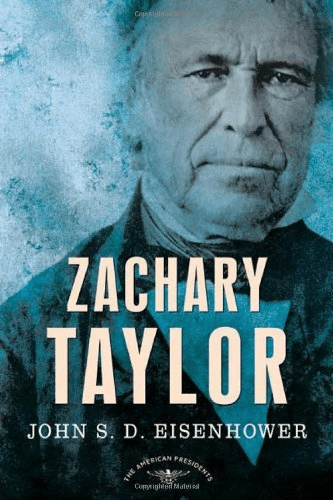
Zachary Taylor by John S. D. Eisenhower

Taylor was born in Virginia in 1784, not far from the home of his distant cousin James Madison. His father was an officer in the Revolutionary War and was head of one of Virginia’s prominent families. However, his family moved to Kentucky shortly after he was born.

He was a wealthy plantation owner, a gentleman farmer, businessman, slave holder, and soldier. There were apparently skirmishes with Native Americans early in his career that are largely unreported. A lot about Taylor has been lost since his personal papers were destroyed in the Civil War (his son was a major general in the Confederate Army).

Continue reading

Polk: The Man Who Transformed the Presidency and America by Walter R. Borneman

James Knox Polk was born in 1795 in a log cabin in North Carolina, within twenty miles of Andrew Jackson, who was 28 years older. His family was Presbyterian, but his grandfather became a deist and Polk himself wasn’t baptized due to his father getting into an argument with the local minister. His family moved to Tennessee in 1806.

Young James was sickly due to urinary stones. In 1812, when he was 17, he survived surgery to remove the stones. He started attending the University of North Carolina when he was 20. At the time, the university was staffed by a single administrator, a single professor, and a few tutors. He graduated in 1818, but was too frail to travel home right away.

Continue reading

William Henry Harrison by Gail Collins

William Henry Harrison grew up in a Virginia mansion (although when he later ran for president, he claimed to have grown up in a log cabin). He was the youngest of seven children. His father was a governor of Virginia and a signer of the Declaration of Independence. His mother was a relative of Martha Washington and also came from a wealthy family.

During the Revolutionary War, the family mansion was sacked (the British took 40 of the family slaves and also stole furniture and livestock) and the overused soil was beginning to produce fewer crops. Harrison therefore didn’t attend William and Mary like his brothers, but rather the less expensive Hampton-Sidney College. He then went to the Medical School of Pennsylvania. His father died when he was 18 and the family couldn’t afford to continue schooling him, so he joined the army.

Continue reading

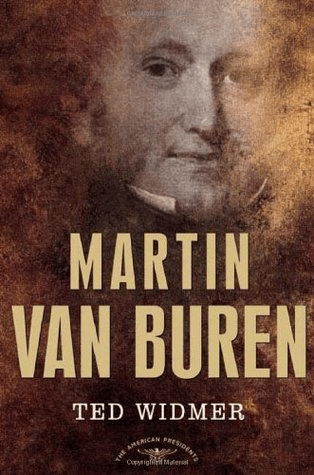
Martin Van Buren by Ted Widmer

Martin Van Buren was the first president born in the United States after the Revolutionary War and also the first president from New York. He’s the only president who didn’t speak English as his native language (he grew up speaking Dutch). He’s one of the few presidents who wasn’t Anglo-Saxon, and one of the few who wasn’t either college-educated or a war hero. He was distantly related to Theodore and Franklin Roosevelt.

He was blond, and to compensate for his baldness, he grew ridiculously big sideburns. He was one of the shorter presidents at five feet, six inches. He was an optimist with a sunny disposition and was friends with the famous writer Washington Irving.

Continue reading

Jacksonland by Steve Inskeep

Andrew Jackson had bushy, bristling hair. At six foot two and only 145 pounds, he was rail thin. His stomach gave him constant trouble, so he didn’t eat much. He did contortions to ease the pain, sometimes draping himself over a sapling knocked sideways.

Jackson was an orphan. His father died before he was born and his mother died of cholera during the Revolution. As a teenager, Jackson was a messenger and fighter for the rebels during the Revolutionary War. Captured by the British along with his brother Robert, he refused to clean an officer’s boots and was struck by a sword, leaving a mark on his head.

Continue reading

Discourses of Brigham Young

Nearly four hundred of Brigham Young’s sermons were recorded in the Journal of Discourses. In this 1925 volume, John A. Widtsoe selects excerpts from Young’s sermons and arranges them thematically. Some of Young’s most controversial teachings (polygamy, blood atonement, the curse of black skin) are mentioned in passing, but the famous quotes about punishing interracial marriage or adultery with death on the spot are left out. I don’t think the doctrine that Adam is God is included in this volume and Brigham Young’s belief that there is life on the sun is also left out of this collection. There are still a lot of interesting things left in, though.

Continue reading

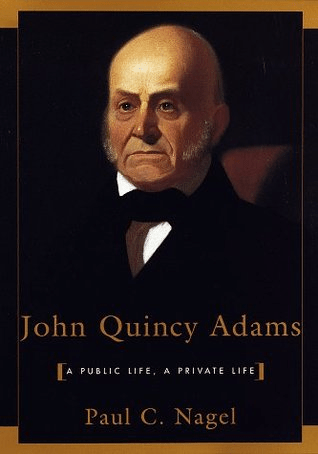
John Quincy Adams: A Public Life, a Private Life by Paul C. Nagel

John Quincy Adams kept a diary almost continuously from the time he was eleven until his death, giving us a lot of insight into his private life. When he was seven, he watched the Battle of Bunker Hill in which the family physician, Dr. Warren, died. Not long before, Dr. Warren had saved JQA’s finger from amputation.

He considered himself the man of the house during his father’s frequent absences. One responsibility he claimed for himself before he was ten, was riding horseback for several miles to fetch the mail.

Continue reading

The Last Founding Father: James Monroe and a Nation’s Call to Greatness by Harlow Giles Unger

James Monroe was born in 1758. He grew up helping with farm chores such as feeding animals, gardening, milking cows, and hunting. At eleven, he went to the same school as future chief justice John Marshall. The two became life-long friends.

At 14, his mother died in childbirth and his father died shortly afterward. His 19-year-old sister raised his three younger brothers. As the oldest boy, he inherited the farm. He was overwhelmed by the responsibility. Fortunately, his wealthy uncle stepped in to help and sent James to college.

Continue reading

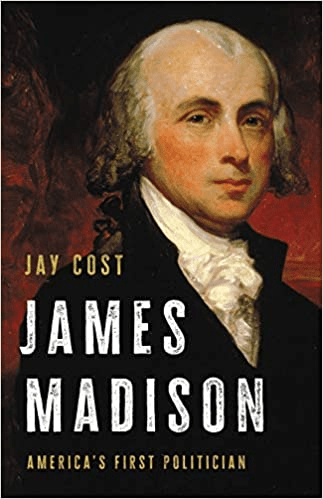
James Madison: America’s First Politician by Jay Cost

James Madison Jr. was nicknamed Jemmy as a child. At five foot, four inches, he was the shortest American president and he never weighed more than 100 pounds. He had a sickly constitution and suffered “sudden attacks somewhat resembling epilepsy” throughout his life. Although he was raised Anglican, he was never a particularly devout Christian.

Jemmy was born to a wealthy slave-owning family. The oldest of twelve children, he attended the College of New Jersey (known as Princeton today). He was soft spoken and had trouble speaking in front of large groups. He was not a fan of drunkenness. At parties, he would water down his drinks or only pretend to take a sip to avoid getting too drunk.

Continue reading

American Sphinx by Joseph J. Ellis

We don’t know much about Thomas Jefferson when he was young due to a fire which destroyed many early records. There’s disagreement amongst people who met him over whether he had clear or freckled skin, whether he had blue, hazel, or green eyes, and whether his hair was sandy red or reddish blond.

We do know he was born to a wealthy family. His father died when he was 14 and he was estranged from his mother. After graduating from the College of William and Mary, he became a lawyer, mostly handling cases involving land claims and titles. He played the violin and was nearly always humming or singing to himself. Building and rebuilding his Monticello estate, which was located on top of a mountain, was a lifelong project.

Continue reading