The Skeptics’ Guide to the Universe Part 4 of 5

38485991._UY500_SS500_.jpg (500×500)

Data mining is sifting through large amounts of data looking for anything that stands out, even if it happened by chance. Astrologers are often guilty of this, using one study to claim people born under certain signs are more accident prone. However, a single study doesn’t prove anything until it’s replicated. A followup study actually demonstrated that people born under different signs are more likely to have car accidents. Continue reading

The Skeptics’ Guide to the Universe Part 3 of 5

38485991._UY500_SS500_.jpg (500×500)

Cognitive biases are flaws in how our brain processes information and heuristics are mental shortcuts which are not always true. For example, we’re more likely to buy something that costs $19.99 rather than $20.00 due to our leftmost digit bias. Handedness bias makes right-handed people prefer the item on the right (and left-handed people the item on the left) when two similar items are presented. An example of framing bias is that we prefer something with a 90 percent survival rate over something with a 10 percent death rate, even though these are both the same. We also take bigger risks to avoid negative outcomes than to achieve positive outcomes. Continue reading

The Skeptics’ Guide to the Universe Part 2 of 5

38485991._UY500_SS500_.jpg (500×500)

People will usually accept new information as long as it doesn’t conflict with an emotional belief that’s part of their identity. When this is challenged, they engage in motivated reasoning, defending their belief illogically and dismissing inconvenient facts. It’s triggered by cognitive dissonance, psychological discomfort which occurs when two ideas conflict. It’s human nature, but we can try to avoid it by not getting emotionally attached to factual beliefs that might turn out to be wrong. Continue reading

The Skeptic’s Guide to the Universe Part 1 of 5

38485991._UY500_SS500_.jpg (500×500)

“So, while we cannot trust the stories we are told, tradition, faith, convenient or reassuring narratives, charismatic figures, or even our own memories, we can slowly and carefully build a process by which to evaluate all claims to truth or knowledge. A big part of that process is science, which systematically tests our ideas against reality, using the most objective data possible. Science is still a messy and flawed process, but it is a process. It has, at least, the capacity for self-correction, to move our beliefs incrementally in the direction of reality. In essence, science is the process of making our best effort to know what’s really real.” Continue reading

Asimov’s March/April 2019

ASF_MarApr2019_400x570.jpg (400×570)

This issue is a tribute to Asimov’s former editor Gardner Dozois and features one of his stories, 1983’s “The Peacemaker” about melting icecaps leading to rising oceans. Several people reminisce about how funny and charming Gardner was. I wasn’t previously familiar with him, but he has more Hugo awards than anyone else, and it sounds like he was both a great writer and editor. Continue reading

Asimov’s January/February 2019

Another great issue full of many great stories. We get a mix of tales, some humorous, some horrific, featuring aliens, time travel, and space travel.

“How Sere Looked for a Pair of Boots” by Alexander Jablokov takes place in a world filled with many different types of aliens who use each other’s body parts, waste products, moltings, and parasites to trade with each other. Hey, everybody’s got something that someone else wants. Continue reading

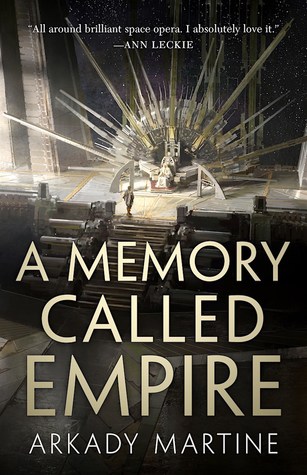
A Memory Called Empire by Arkady Martine

39863625.jpg (307×475)

When I first cracked open this book and saw it contained words such as Teixcalaanlitzlim, I thought it would be a lot of work to get through. But once I dove in, it wasn’t that difficult. Sure, there are a few alien words here and there, but not so many that it becomes a chore. Just the right amount to add spice. Plus, there’s a pronunciation guide in back in case you’re wondering how these words are supposed to sound. (This book focuses a lot on linguistics and the differences between languages.) Continue reading

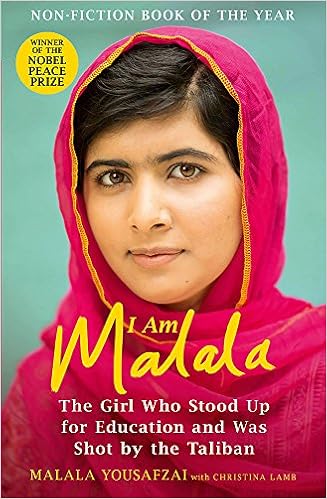
I Am Malala: The Girl Who Stood Up for Education and Was Shot By The Taliban

514LSYyGCGL._SX325_BO1,204,203,200_.jpg (327×499)

“It seemed to me that everyone knows they will die one day. My feeling was nobody can stop death; it doesn’t matter if it comes from a Talib or cancer. So I should do whatever I want to do.”

Malala Yousafzai was raised in the Swat Valley of Pakistan, often called the Switzerland of the East since rich people from around the world used to go on holiday there. Almost anywhere you go in Swat, you’ll find the remains of old Buddhist temples. Malala relates the ancient history of the area as if it were her own family history. Continue reading

The Voynich Manuscript

a8353af5cc23e27b4e3e1e9bcd27c5a7.jpg (220×293)

The Voynich Manuscript has remained a mystery for centuries. First off, it’s written in an unknown script by an unknown author. It might be a hitherto unknown language, a cipher, or just plain nonsense. It features images of unknown plants, possible star charts featuring zodiac-like imagery, and pictures of naked women bathing in pools connected by tubes which may be balneological (relating to healing baths). Several pages are missing from it. Continue reading