You Did Nothing Wrong by C.G. Drews

A recent transplant from Australia, Elodie has just moved to Virginia with her new husband Bren who is renovating his parent’s old house. As the story opens, they’re in the honeymoon phase of their relationship, madly in love with each other.

Elodie is only 22 and Bren is only 23, although they act older than this due to the weight of the world landing more heavily on them than most. (Bren’s parents died when he was 10 and Elodie’s brother died when she was 8.)

Continue reading

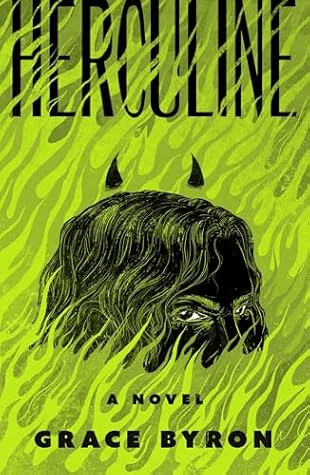
Herculine by Grace Byron

To the unnamed narrator of Herculine, seeing demons is a normal occurrence. She uses her childhood Christianity to ward off the demons even though she’s no longer a practicing Christian. We’re told demons lay claim to those who’ve been traumatized. A lot of the narrator’s complicated past is given rapid-fire in asides, giving the novel a fast-paced feel.

Continue reading

Exiles by Ashley and Leslie Saunders

Damon Yates is a tech billionaire who created hyperloops for fast travel between cities and is also involved in space travel. He runs an academy to train children to become tech millionaires like him. He’s also made it possible for a paralyzed student to walk again and has cured mental illness in another student. He’s referred to as the Savior for all the good he’s done, however there are some who think he’s up to no good and use his nickname as a curse word.

Continue reading

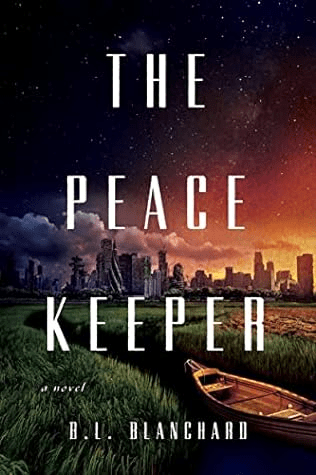
The Peacekeeper by B.L. Blanchard

“Love can justify just about any action, no matter how horrible.”

This novel takes place in an alternate universe in which America was never colonized by Europeans. (However, the native tribes did assimilate each other.) The world is similar to ours in terms of technological level, but society is organized differently. Different cultures from around the world get along with each other better than in our world. Skyscrapers are designed to incorporate plant growth making for carbon negative cities. There’s nationalized health care and universal basic income, however there are still beggars so the system isn’t perfect.

Continue reading

Breathe In, Bleed Out by Brian McAuley

After the mysterious death of her fiancé, Hannah goes on a healing retreat with her friends. The retreat is located in a remote spot, so there’s no cell service, but this is a feature since less time with phones helps mental health. All five friends are suffering from trauma of their own, although this isn’t apparent at first. Even the former frat boy Jared ends up having hidden depths.

Continue reading

Theodore Roosevelt by Henry F. Pringle

Happy Independence Day! Last year for the Fourth of July, I wrote about Rutherford B. Hayes. Two years ago, on July 1st I wrote about John Tyler. This year, I’m writing about Theodore Roosevelt.

Theodore Roosevelt, Jr. was born to a well-off family in New York in 1858. Called Teedie, he was a sickly child who suffered from asthma and was extremely nearsighted. He read constantly and wanted to be a naturalist (he smelled of formaldehyde until he left for college). His mother once ordered the maid to clean the dead mice out of his bureau and he mourned “The loss to Science!”

Continue reading

President McKinley: Architect of the American Century by Robert W. Merry

William McKinley Jr. was born in Ohio in 1843, the seventh of nine children. He grew up in a small town with only 300 inhabitants. His father produced pig iron. His Methodist mother was opposed to slavery and encouraged education.

As a small boy, Will drove the cows to and from pasture. In winter, his feet were so cold, he warmed them up by pressing his feet in the soil where the cows had lain to enjoy the “pure luxury” of their leftover warmth.

Continue reading

Lives of the Presidents by Julian De Vries

Lives of the Presidents by Julian De Vries was published in 1940, so it only covers the presidents up to FDR, with each president getting an average of 8 pages each. He provides no citations or bibliography, so it feels like an amateur effort. Of the 30 presidents he covers, only ten of the presidents get ten or more pages (the first 7 presidents, Lincoln, Grant, and FDR), giving the impression that the most important period of American history is the beginning. He devotes 29 pages to Andrew Jackson, 21 to Thomas Jefferson, and 18 to John Adams so they must be his favorites. Four of the presidents only get 3 pages each (Pierce, Buchanan, Teddy Roosevelt, and Harding) so they must be his least favorite. Why does Theodore Roosevelt only get two and a half pages while Andrew Jackson gets 29?

Continue reading

Benjamin Harrison by Charles W. Calhoun

Benjamin Harrison was born in 1833 in his grandfather’s house in North Bend, Ohio, the second of ten children. His great grandfather Benjamin Harrison V was governor of Virginia and his grandfather William Henry Harrison was the ninth president of the United States. His father John Scott Harrison served in Congress, however, he was a farmer who was often in debt. His mother was a strict Presbyterian.

Benjamin worked on the farm as a child, and also enjoyed hunting, fishing, and reading. He attended a log cabin school built on his father’s property. When he was 14, his father sent him to Farmer’s College near Cincinnati where Presbyterian minister Professor Robert Hamilton Bishop became a powerful influence, keeping him up-to-date on contemporary political issues and instructing him in religion.

Continue reading