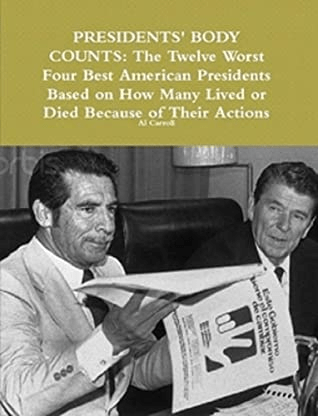
Presidents’ Body Counts by Al Carroll Part 3

Franklin Roosevelt

Franklin Roosevelt did not allow Jewish refugees to the US, condemning many to death in the Holocaust. He also could have lessened the atrocity by attacking Germany sooner than he did. (Incidentally, Henry Ford owned the best selling newspaper in the country and used it to spread anti-Semitism. Ford Auto company was also a haven for Nazis and he promoted their views on company grounds. Ford even received a special award from Hitler.)

Continue reading

Presidents’ Body Counts by Al Carroll Part 2

Bill Clinton

Clinton not only didn’t try to stop the Rwandan genocide, he pushed for the UN to withdraw and denied a genocide was happening. Clinton could have saved 300,000 to 600,000 lives if he’d sent just 5,000 US troops to intervene.

Right-wing terrorists murdered at least 288 people from 1995 to 2012 and attempted to assassinate Clinton, George W. Bush, and Obama. Clinton’s mishandling of the Branch Davidians, Randy Weaver, and the Republic of Texas militia led to more recruitment for right-wing terrorists.

Continue reading

Presidents’ Body Counts by Al Carroll Part 1

When presidents of the United States are ranked from best to worse, they’re generally judged on subjective things like leadership, charisma, etc. and the lists end up merely being a popularity contest, often based on the politics of the person doing the ranking. George Washington is often listed as one of the best presidents, not because he did anything particularly noteworthy while president, but simply because he was the first.

Continue reading

A Promised Land by Barack Obama

55359022._SY475_.jpg (316×475)

“If you wanted good government, then expertise mattered. You needed public institutions stocked with people whose job it was to pay attention to important stuff so the rest of us citizens didn’t have to. And it was thanks to those experts that Americans could worry less about the quality of the air we breathed or the water we drank, that we had recourse when employers failed to pay us the overtime we were due, that we could count on over-the-counter drugs not killing us, and that driving a car or flying on a commercial airplane was exponentially safer today than it had been just twenty or thirty or fifty years ago. The ‘regulatory state’ conservatives complained so bitterly about had made American life a hell of a lot better.

“That’s not to say that every criticism of federal regulation was bogus. There were times when bureaucratic red tape burdened businesses unnecessarily or delayed innovative products from getting to market. Some regulations really did cost more than they were worth.”

Continue reading