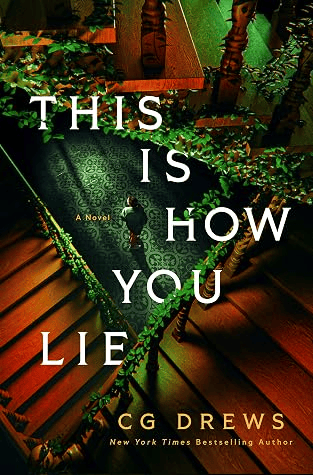
Wren Ott has left her husband and become a nanny. She has a troubled past that’s only hinted at for the first half. She has waking nightmares and she’s being haunted by something. The baby she’s taking care of has been neglected. He doesn’t smile or show interest in anything at first, but begins to warm up to her. She has romantic feelings for the cook Declan as well as her employer, Cadence. Cadence doesn’t seem that interested in her baby and her husband Lucien appears to be abusive.
There’s a few misandronist statements sprinkled throughout claiming men always lie or men don’t like it when women talk, but I think these are meant to be Wren’s opinions and not the opinions of the author.
The book reminded me a lot of The Housemaid, a movie I watched at the same time I was reading this. Especially the first half. Both stories have a surprise reveal at the half-way point that completely changes everything.
I think it’s generally true that we all want to tell the truth of ourselves to someone else, so at least one other person knows who we really are. It’s also true that stories change depending on who’s telling it. A hungry fox finding an egg to eat is a story of survival from the fox’s point of view, but it’s a horror story from the mother bird’s point of view.
You can lie just by leaving out the other person’s perspective. This book demonstrates how changing the point of view changes the entire story. Adding in details that someone else left out changes the context of their actions.
All of this reminds me of the fundamental attribution error from psychology. We all tend to attribute other people’s bad behavior to their personality, while attributing our own bad behavior to the circumstances. For example, we’ll think another person ran a red light because they’re a horrible person, but when we do it, it’s because we’re running late.
This is How You Lie is similar to the author’s previous novel You Did Nothing Wrong in that the viewpoint character is also an unreliable narrator running away from a troubled past. Also, both stories mainly take place inside a possibly haunted house with a small cast of characters. This book wasn’t as stressful to read as You Did Nothing Wrong, though.
I felt like the baby was largely forgotten about by the end. A scene in which the baby was put into danger towards the end could have added some emotional impact. Overall, this is a pretty good story.

