The Year’s Best Science Fiction, Sixteenth Annual Collection edited by Gardner Dozois

It’s not immediately obvious, but the year in question is 1998. This whopper of a book, containing over a quarter million words of fiction, begins with a 50-page summary of all the science fiction novels, short stories, collections, magazines, movies, TV shows, and more that appeared in 1998. It’s humorous in retrospect that editor Gardner Dozois says South Park is beginning to grow repetitive and he predicts its influence is beginning to wane, since it’s still making new episodes over twenty years later.

Continue reading

A. Lincoln by Ronald C. White, Jr.

Abraham Lincoln spoke in a high-pitched voice and had disproportionately large hands and a long neck. Walt Whitman wrote that Lincoln’s face was “so awful ugly it becomes beautiful.”

Lincoln didn’t speak a lot. His law partner said “He was the most shut-mouthed man that ever existed.” He was careful not to express certainty, once stating, “I am almost ready to say this is probably true.” He sought out the opinions of his opponents and looked at questions from every side. He had a keen sense of humor. He never officially joined a church, but he became deeply religious after becoming president.

Continue reading

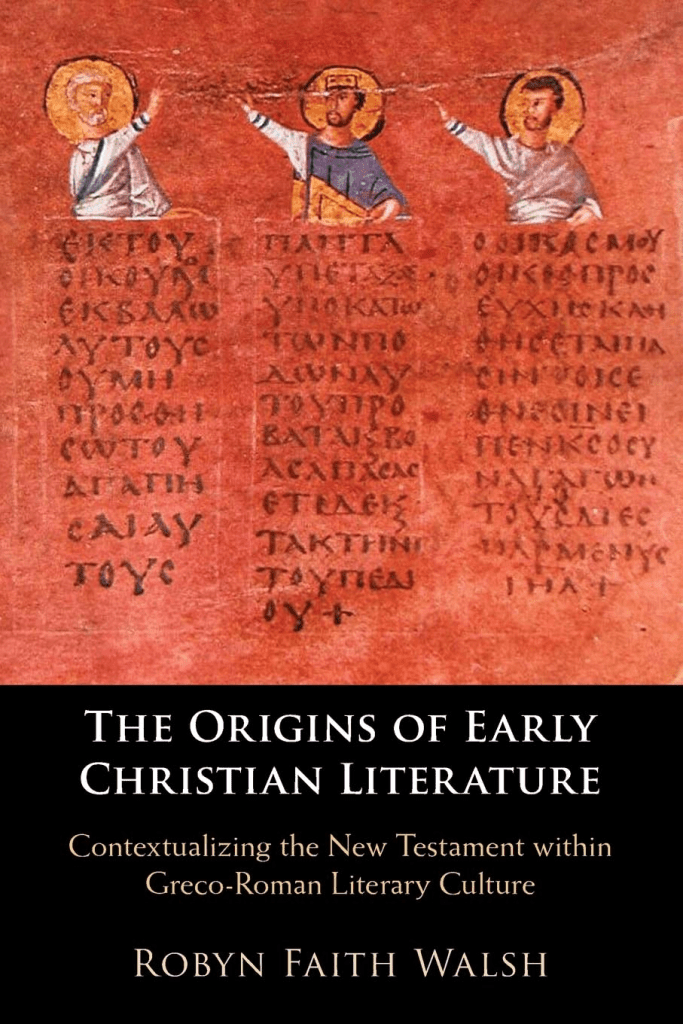
The Origins of Early Christian Literature by Robyn Faith Walsh

Because many people today believe in Christianity, studies of ancient Christian texts are handled differently than studies of ancient Greek or Roman religious writings. The field of classics is more strict with regards to what counts as evidence, while religious studies is more lenient. In this volume, Walsh applies the same standards used for studying classics to Christianity.

New Testament scholars often invoke oral history (for which there’s no evidence) or make appeals to the gospel writer’s religious community (for which there’s no evidence). They claim the gospels are unique and ignore the literary tradition they belong to. They claim Jesus is unique and ignore his similarity to Aesop, the Cynics, and the heroes of Greek novels.

Continue reading

Worst. President. Ever. by Robert Strauss

James Buchanan was born in a log cabin in Pennsylvania in 1791, the second of 11 children, not far from the Mason Dixon line. His father, also named James Buchanan, owned a general store which was successful enough for him to buy a substantial farm, then a store on main street in Mercersburg, and he eventually became one of the richest men in the area. As the oldest son, the younger James Buchanan was the favorite among his siblings, and was particularly close to his mother.

At 16, Buchanan went to college at Dickinson, but since his mother had already educated him in the classics, he found college too easy. He began his lifelong habit of smoking cigars (in later years, he would chew the ends of unlit cigars). He was the smartest student and also the most arrogant, flouting school rules. He got expelled for disorderly conduct.

Continue reading

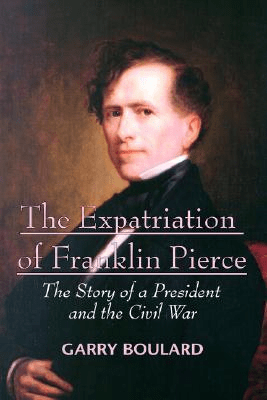
The Expatriation of Franklin Pierce by Garry Boulard

Benjamin Pierce fought in the Revolutionary War, was a sheriff, state legislator, and a local hero. However, his lack of education made him hesitate from a life of politics. He encouraged his son Franklin to be a politician. At 14, Franklin Pierce was sent to boarding school, then to Bowdoin College two years after that.

He wasn’t enthusiastic about school and came in dead last on the list of student standings his first year. He determined to do better. During the summer he made some money teaching. When he returned to college, he formed a marching unit. Younger students Nathaniel Hawthorne and Henry Wadsworth Longfellow drilled under his command and became friends with him.

Continue reading

Pyrotechnicon by Adam Browne

“That I have left my tales intact, complete with imperfections, serves not as proof of my dishonesty, but the opposite! Any blame lies not with the poor author who writes with the strictest regard to honesty, but with the events themselves.”

Pyrotechnicon is a fantastical, whimsical novel in which Cyrano de Bergerac has to face off against a man who’s part billiard table, a giant microscopic organism, a house made of birds, and other fantastical wonders. It’s pre-steampunk science fiction based on 17th century scientific ideas taken to their logical conclusions.

Continue reading

Again, Dangerous Visions edited by Harlan Ellison

Again, Dangerous Visions, published in 1972, was the follow up to the successful anthology Dangerous Visions. Each story has an introduction written by Ellison and an afterword written by the author. In some cases, the introduction and afterword are longer than the story itself.


In many of the introductions, Ellison tells us a third anthology in the series titled The Last Dangerous Visions is going to be published soon, and even shares the names of some of the authors who will appear. Alas, this third volume was never published during his lifetime. I get the impression Ellison wanted to include every prominent science fiction author of the time in these three volumes, but wasn’t able to pull it off since new writers kept coming along. (Ellison’s executor, J. Michael Straczynski, announced plans to publish a slimmed-down version of The Last Dangerous Visions in 2020, but it still hasn’t seen the light of day as of this writing.)

Continue reading

Millard Fillmore by Kevin J. Law

Millard Fillmore was born in 1800 in a log cabin to a poor tenant farmer in New York. He was named Millard after his mother’s maiden name. His father and uncle had been sold a land title sight unseen. The land turned out to be hard clay not good for farming. On top of that, the title was faulty and they lost the land. They ended up moving a few miles south where the land wasn’t much better.

Fillmore grew up doing farm chores. He had four brothers and four sisters. His father considered hunting and fishing (“sporting”) to be a waste of time. When Fillmore was 14, he was apprenticed to an ill-tempered cloth maker. He quit after 4 months, but his father found him another cloth-making apprenticeship that he stayed at for years.

Continue reading

Do Androids Dream of Electric Sheep? by Philip K. Dick

The novel Do Androids Dream of Electric Sheep? is similar to the movie Blade Runner which was based on it, but also very different. Rick Deckard is married rather than single and surprisingly, owns an electric sheep. Since animals are nearly extinct, owning one is a status symbol. Those who can’t afford a real animal, buy electronic facsimiles. Due to the lack of animals, everyone on earth is a vegetarian through necessity and eating meat is considered atrocious.

Deckard, like most men, wears a lead codpiece to keep the radiation in the atmosphere from making him infertile. Most humans have left for the colonies, so Earth is nearly empty. Radiation has turned some people into mutants called specials. (In addition to Deckard, the other major viewpoint character is John Isidore, a special with diminished mental capacity who’s not allowed to go to the colonies.)

Continue reading