Book of Revelations by Fred C. Collier Part 1

Fred C. Collier’s Church of the Firstborn is a spliter group of another Church of the Firstborn, also known as the LeBaron family, which is a Mormon polygamist group. According to Wikipedia, there were only about 100 members of Collier’s sect in 2004. So why am I bothering to give a summary of Collier’s Book of Revelations when it’s obviously so obscure? Honestly, the fact that it’s obscure is part of why I’m interested in it. Also, perhaps owing to my own Mormon upbringing, I find the idea of people continuing to write new scriptures up to the present day fascinating.

Continue reading

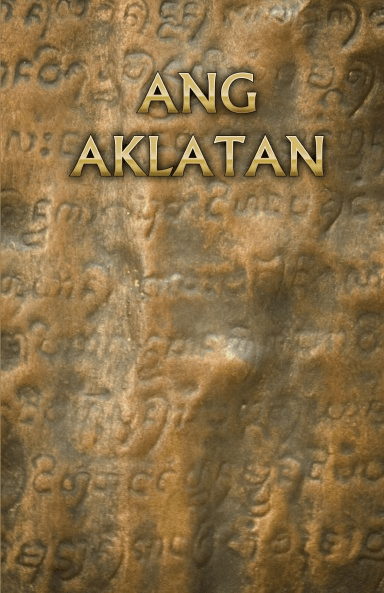
Ang Aklatan Part 3 of 3

Continuing my review of the Ang Aklatan…

We’re told three letters regarding Jesus Christ are included, but there appear to be only two and neither of them are written in the form of a letter.

The Gospel written by Angulu

Angulu was chosen of God at ten years of age, despite his father not being a believer in Christ. He’s told to go to Jerona. When he attains manhood at age twelve, he travels to Jerson. During the journey, he rests by the side of the stream Taborong and sees a rather Freudian vision of a rod of a tree sprouting up and a handmaiden taking hold of the rod. The rod of the tree divides a fertile land. A great tree, representing a prophet, arises out of the land, bearing fruit.

Continue reading

Ang Aklatan Part 1 of 3

Through a series of dreams, Elisha M. Enoc translated the Aklatan from a set of copper sheets he discovered after having a vision. The Aklatan contains a record of the ancient history of the Philippines, Taiwan, and Borneo and Christ’s visitation to the ancient people of these islands, just as the Book of Mormon describes the ancient history of America and Christ’s visit to those people. While all the books of the Aklatan have been translated, not all have been published yet.

Continue reading

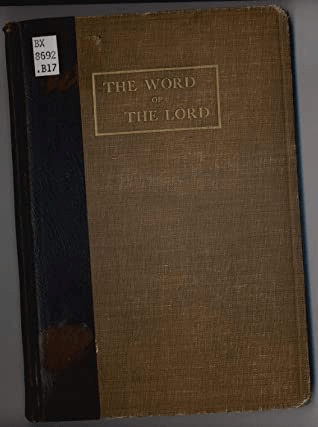
The Word of the Lord by Harry Edgar Baker

There are three different texts titled The Word of the Lord used by different Mormon splinter groups. One was written by Otto Fetting between 1927-1933. Another was written by William Draves starting in 1933. However, I could find next to nothing online about about the text written by Harry Edgar Baker between 1916 to 1918. Wikipedia mentions the other two books sharing this title, but not this earlier one.

Continue reading