The Last Founding Father: James Monroe and a Nation’s Call to Greatness by Harlow Giles Unger

James Monroe was born in 1758. He grew up helping with farm chores such as feeding animals, gardening, milking cows, and hunting. At eleven, he went to the same school as future chief justice John Marshall. The two became life-long friends.

At 14, his mother died in childbirth and his father died shortly afterward. His 19-year-old sister raised his three younger brothers. As the oldest boy, he inherited the farm. He was overwhelmed by the responsibility. Fortunately, his wealthy uncle stepped in to help and sent James to college.

Continue reading

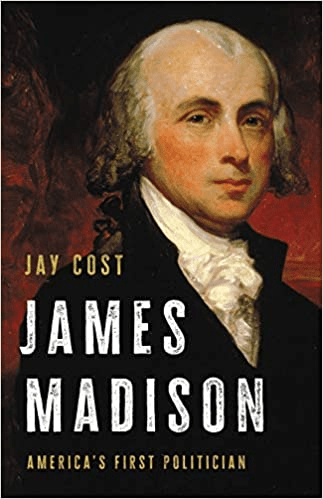
James Madison: America’s First Politician by Jay Cost

James Madison Jr. was nicknamed Jemmy as a child. At five foot, four inches, he was the shortest American president and he never weighed more than 100 pounds. He had a sickly constitution and suffered “sudden attacks somewhat resembling epilepsy” throughout his life. Although he was raised Anglican, he was never a particularly devout Christian.

Jemmy was born to a wealthy slave-owning family. The oldest of twelve children, he attended the College of New Jersey (known as Princeton today). He was soft spoken and had trouble speaking in front of large groups. He was not a fan of drunkenness. At parties, he would water down his drinks or only pretend to take a sip to avoid getting too drunk.

Continue reading

The Complete Poems of Edgar Allan Poe

I’ve recently reviewed the stories of Edgar Allan Poe. Now I’m going to take a look at his poetry. Poe has a reputation for writing horror stories, but he also wrote stories of adventure, mystery, science fiction, fantasy, and humor. Likewise, not all of his poems are dark and melancholy. He also wrote love poems and poems with a joyful tone. He even wrote a Hymn to Mary, Mother of God. Due to their sing-song rhythm and oft-repeated lines, many of his poems feel like songs. Love, death, and dreams seem to be his favorite topics. Some of his poems rhyme, some don’t.

My favorite poems of his are “The Raven”, “A Dream Within a Dream”, “The Conqueror Worm”, and “Dream-Land”. Honorable mentions go to “Bridal Ballad”, “Lenore”, “Silence”, and “Romance”.

Continue reading

American Sphinx by Joseph J. Ellis

We don’t know much about Thomas Jefferson when he was young due to a fire which destroyed many early records. There’s disagreement amongst people who met him over whether he had clear or freckled skin, whether he had blue, hazel, or green eyes, and whether his hair was sandy red or reddish blond.

We do know he was born to a wealthy family. His father died when he was 14 and he was estranged from his mother. After graduating from the College of William and Mary, he became a lawyer, mostly handling cases involving land claims and titles. He played the violin and was nearly always humming or singing to himself. Building and rebuilding his Monticello estate, which was located on top of a mountain, was a lifelong project.

Continue reading

The Complete Stories of Edgar Allan Poe Part 4 of 4

The Narrative of A. Gordon Pym of Nantucket

Poe’s done his research regarding life at sea, sometimes going on for pages about stowage or sails or sea cucumbers. Pym keeps repeating that what happens to him can’t be imagined by someone who hasn’t been in a similar position.

As a schoolboy, Pym and his friend Augustus take their boat out at night. Augustus is drunker than he appears and passes out. Pym doesn’t know how to operate a boat. A whaling vessel runs them over, destroying their boat, but through good luck, the whaling crew manages to save them.

Continue reading

The Complete Stories of Edgar Allan Poe Part 3 of 4

Flights and Fantasies

The Balloon-Hoax

A balloon is said to have crossed the Atlantic in three days. Why did they bring sailors? He said it would be explained later and it wasn’t. This wasn’t originally published as a story, but was rather a journalist hoax.

Mesmeric Revelation

Mr. Vankirk is skeptical of the afterlife. P. (Poe?) mesmerizes him. They have a philosophical discussion about God, the nature of matter, how pain is necessary to appreciate pleasure, etc. Inhabitants of Venus are mentioned. He may have died during the séance.

Continue reading

The Complete Stories of Edgar Allan Poe Part 2 of 4

Humor and Satire

The System of Doctor Tar and Professor Fether

Patients at an asylum think they’re chickens, donkeys, a tea pot, etc. The lunatics end up taking over the asylum and tar and feather the employees. The narrator takes too long to figure out what’s happening. I didn’t find it funny, but your milage may vary.

The Literary Life of Thingum Bob, Esq.

Narcissistic writer tells his life story. He started his career by plagiarizing Dante, Homer, etc. Humorously, editors declare the writing drivel. He then writes a bad two line poem and everyone praises him, although the editor won’t pay him. He goes on to become a famous editor himself.

Continue reading

The Complete Stories of Edgar Allan Poe Part 1 of 4

I’m a big fan of Mike Flanagan. His next series on Netflix is The Fall of the House of Usher, coming some time later this year. It will be based on the work of Edgar Allan Poe. Poe is having a bit of a moment on Netflix right now with Wednesday and The Pale Blue Eye also invoking him, so now seems like a good time to revisit Poe’s work.

Poe sometimes quotes other languages without providing English translations, so it’s a good idea to have your phone handy while reading to translate for you. He sometimes blanks out the year or character names for some reason. I also noticed he uses lots of adverbs. (Supposedly, good writers don’t use a lot of adverbs, but I’m not convinced that’s true.)

The narrators of his stories often go unnamed. I wonder if this is because the reader is supposed to think Poe is the viewpoint character? This seems especially likely in stories where the narrator’s name is given as P. or P__. Some of his narrators marry their cousins, like Poe himself did.

Continue reading