The Literary Hatchet Issue #23

LH23cover200.png (200×300)

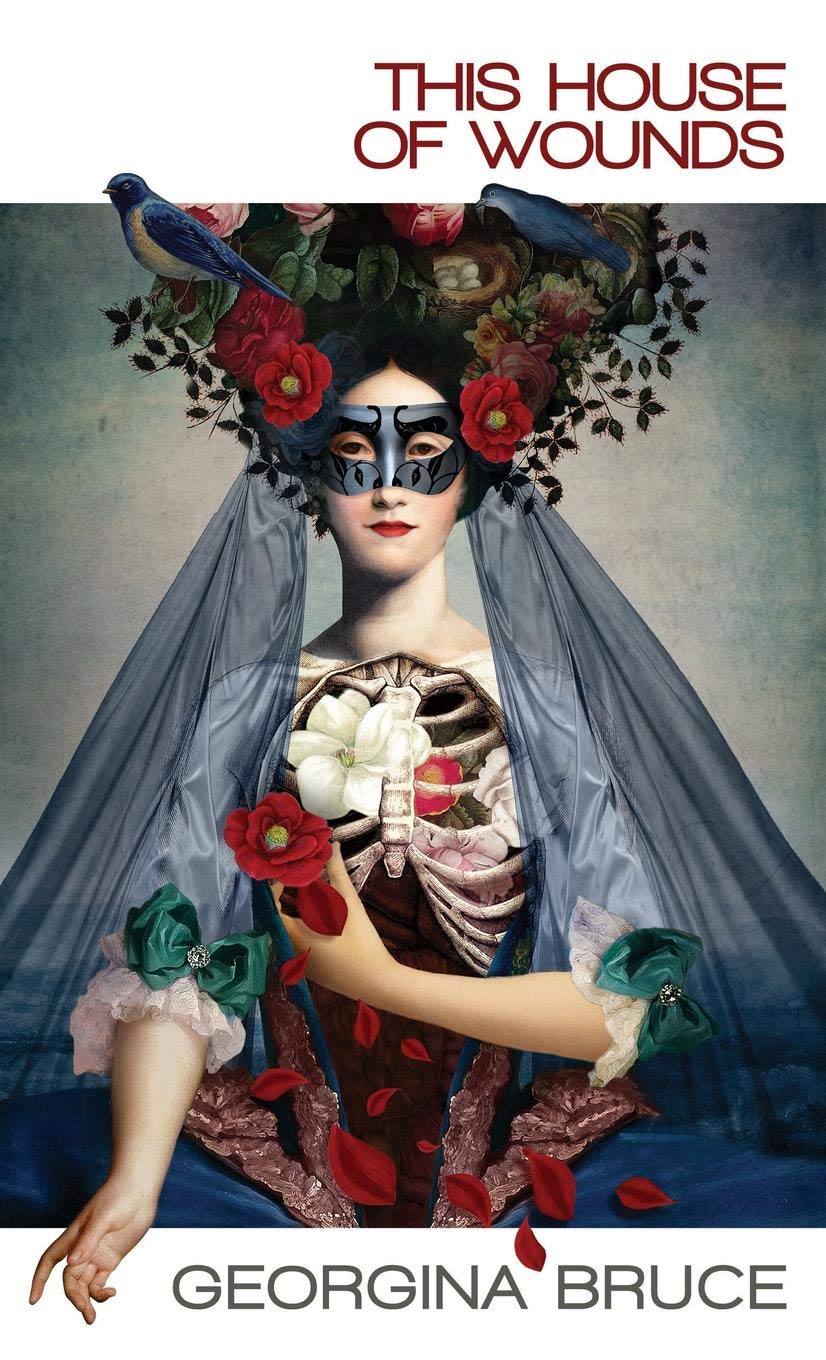
My story “Suckling Reflex” was just published in The Literary Hatchet Issue #23 which you can read for free online (it will also be available on Amazon in a few days). Don’t you just love the cover? I think it has a kind of Alice in Wonder feel to it. Anyway, since this is a flash fiction story, saying almost anything about it would get into spoiler territory, but I’ll just say that it’s about a mother with a newborn baby who’s a bit unusual in some way. Feel free to let me know what you think of the story in the comments.

The Skeptics’ Guide to the Universe Part 5 of 5

38485991._UY500_SS500_.jpg (500×500)

This book covers many other things such as free energy, homunculus theory, vitalism, dualism, and pyramid schemes. An important take-away from the chapter on quantum woo is that quantum effects don’t apply to anything much bigger than an atom, so don’t believe anyone who tells you quantum effects apply to your day-to-day life. The chapter on N Rays demonstrates that intelligent people aren’t more likely to be good at critical thinking, just better at coming up with rationalizations. Continue reading

The Skeptics’ Guide to the Universe Part 4 of 5

38485991._UY500_SS500_.jpg (500×500)

Data mining is sifting through large amounts of data looking for anything that stands out, even if it happened by chance. Astrologers are often guilty of this, using one study to claim people born under certain signs are more accident prone. However, a single study doesn’t prove anything until it’s replicated. A followup study actually demonstrated that people born under different signs are more likely to have car accidents. Continue reading

The Skeptics’ Guide to the Universe Part 3 of 5

38485991._UY500_SS500_.jpg (500×500)

Cognitive biases are flaws in how our brain processes information and heuristics are mental shortcuts which are not always true. For example, we’re more likely to buy something that costs $19.99 rather than $20.00 due to our leftmost digit bias. Handedness bias makes right-handed people prefer the item on the right (and left-handed people the item on the left) when two similar items are presented. An example of framing bias is that we prefer something with a 90 percent survival rate over something with a 10 percent death rate, even though these are both the same. We also take bigger risks to avoid negative outcomes than to achieve positive outcomes. Continue reading

The Skeptics’ Guide to the Universe Part 2 of 5

38485991._UY500_SS500_.jpg (500×500)

People will usually accept new information as long as it doesn’t conflict with an emotional belief that’s part of their identity. When this is challenged, they engage in motivated reasoning, defending their belief illogically and dismissing inconvenient facts. It’s triggered by cognitive dissonance, psychological discomfort which occurs when two ideas conflict. It’s human nature, but we can try to avoid it by not getting emotionally attached to factual beliefs that might turn out to be wrong. Continue reading

The Skeptic’s Guide to the Universe Part 1 of 5

38485991._UY500_SS500_.jpg (500×500)

“So, while we cannot trust the stories we are told, tradition, faith, convenient or reassuring narratives, charismatic figures, or even our own memories, we can slowly and carefully build a process by which to evaluate all claims to truth or knowledge. A big part of that process is science, which systematically tests our ideas against reality, using the most objective data possible. Science is still a messy and flawed process, but it is a process. It has, at least, the capacity for self-correction, to move our beliefs incrementally in the direction of reality. In essence, science is the process of making our best effort to know what’s really real.” Continue reading

Libel

Previously on this blog, I wrote about plagiarism. This week, I’ll cover another way writers can get into legal trouble: libel (the written form of slander). Basically, if you write something derogatory about a living person that you can’t prove is true, and it’s not obviously a comedic exaggeration, you can be sued for libel. Continue reading

Plagiarism

Image result for plagiarism

Writers commonly use each other’s ideas. In fact, we kind of have to because there are a limited number of plot lines. There are a few things you can do if you want to avoid being too derivative. Combine ideas from multiple sources together. Use nonfiction or the news as inspiration rather than other stories. Get ideas from your own personal experience including your dreams. But in the end, all literature plagiarizes from the literature that came before it to some degree. Continue reading

Asimov’s March/April 2019

ASF_MarApr2019_400x570.jpg (400×570)

This issue is a tribute to Asimov’s former editor Gardner Dozois and features one of his stories, 1983’s “The Peacemaker” about melting icecaps leading to rising oceans. Several people reminisce about how funny and charming Gardner was. I wasn’t previously familiar with him, but he has more Hugo awards than anyone else, and it sounds like he was both a great writer and editor. Continue reading