We’re told three letters regarding Jesus Christ are included, but there appear to be only two and neither of them are written in the form of a letter.
The Gospel written by Angulu
Angulu was chosen of God at ten years of age, despite his father not being a believer in Christ. He’s told to go to Jerona. When he attains manhood at age twelve, he travels to Jerson. During the journey, he rests by the side of the stream Taborong and sees a rather Freudian vision of a rod of a tree sprouting up and a handmaiden taking hold of the rod. The rod of the tree divides a fertile land. A great tree, representing a prophet, arises out of the land, bearing fruit.
The introduction tells us the remaining chapters of the Book of Ahkman have yet to be published, so we’ll have to stay tuned for that. Unlike Suran, this is written in the first person. It gives a list of children and grandchildren of Suran. Unlike the Book of Mormon, the daughters are named.
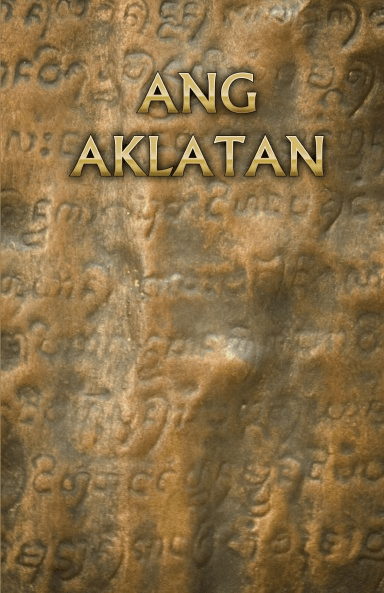
Through a series of dreams, Elisha M. Enoc translated the Aklatan from a set of copper sheets he discovered after having a vision. The Aklatan contains a record of the ancient history of the Philippines, Taiwan, and Borneo and Christ’s visitation to the ancient people of these islands, just as the Book of Mormon describes the ancient history of America and Christ’s visit to those people. While all the books of the Aklatan have been translated, not all have been published yet.
Living standards have improved a lot since the 1980s. 24 charts that show we’re (mostly) living better than our parents. Full Stack Economics.
3D-printed implants that grow new breast tissue before breaking down without a trace could help breast cancer survivors. The Guardian.
Dissolving implantable device relieves pain without drugs. Northwestern.
In a world-first, scientists create eco-friendly cement from algae. Interesting Engineering.
Climeworks is building a bigger carbon removal plant — and getting some new competition. Grist.
$26K solar car now has a factory — and will roll out this year. Freethink.
How child mortality fell from 40% to 3.7% in 200 years. Big Think.
India reports 86% fall in malaria cases since 2015 and a 79% reduction in deaths. Economic Times.
French drugmaker Sanofi will make 30 of its treatments, including insulin, available on a not-for-profit basis in 40 lower-income countries. Reuters.
The DNA-altering technology CRISPR is making strides in potential one-and-done treatments for sickle cell disease, genetic liver conditions, and more. Boston Globe.
NHS to test using drones to fly chemotherapy drugs to Isle of Wight. The Guardian.
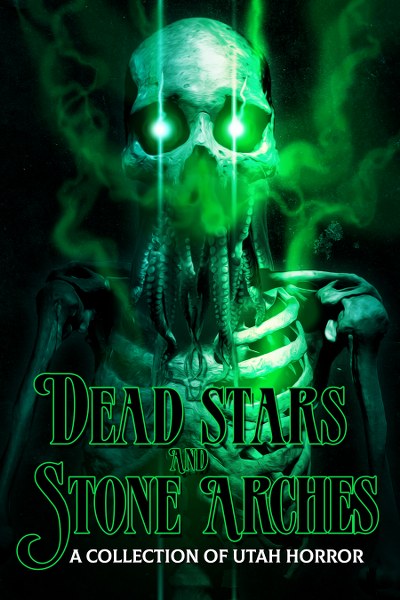
There is something out there, just beyond the reach of human understanding. It flits at the corner of our eyes and titillates the hairs on the back of our necks. You can feel it sometimes, just under your skin. Fortunately, most of us will never know the full extent of what lies sleeping in the cosmos. They are the lucky ones. However, those few who glimpse the maddening truth become forever changed. Contained within this esoteric tome are thirty-seven stories and poems about forbidden knowledge, hidden terrors, and mind-breaking horrors that lurk in the dark places of the earth. Be warned, though, there’s no stopping once you start this journey, and sometimes, ignorance is bliss.
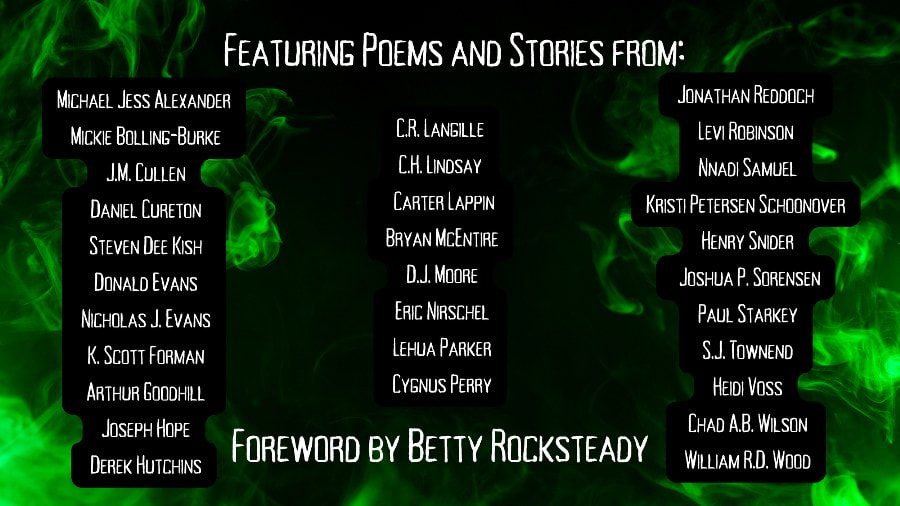
Featuring poems and stories by:
Michael Jess Alexander, Mickie Bolling-Burke, J.M. Cullen, Daniel Cureton, Steven Dee Kish, Donald Evans, Nicholas J. Evans, K. Scott Forman, Arthur Goodhill, Joseph Hope, Derek Hutchins, C.R. Langille, C.H. Lindsay, Carter Lappin, Bryan McEntire, D.J. Moore, Eric Nirschel, Lehua Parker, Cygnus Perry, Jonathan Reddoch, Levi Robinson, Nnandi Samuel, Kristi Petersen Schoonover, Henry Snider, Joshua P. Sorensen, Paul Starkey, S.J. Townend, Heidi Voss, Chad A.B. Wilson, William R.D. Wood
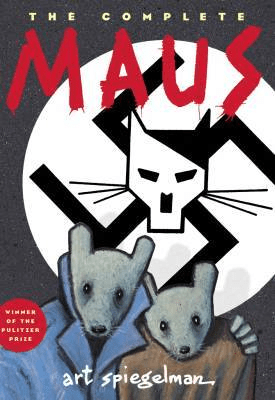
Maus takes the form of two parallel stories. In the present, Art Spiegelman is trying to learn about his father Vladek’s experience during the Holocaust. In the past, we see his father’s story come alive. The artwork depicts Jews as mice, Nazis as cats, Americans as dogs, and other nationalities as other animals.
For the first time in the history of Hawaii’s prison system, there are no incarcerated juvenile females. Newsweek.
Scientist develops antimicrobial, plant-based food wrap designed to replace plastic. Rutgers.
Nanoparticle sensor can distinguish between viral and bacterial pneumonia allowing doctors to avoid prescribing antibiotics in cases where they won’t be effective. MIT News.
U.S. House passes a major wildlife conservation spending bill. NPR.
A look at state efforts to combat climate change in 2022, so far. Changing America.
Hoboken hasn’t had a traffic death in four years. Curbed.
Colombia’s landmark Road Safety Law could save countless lives. WHO.
Buying from Mark Cuban’s pharmacy could save Medicare billions, study says. The Wall Street Journal.
Evanston, Illinois is the first city to offer reparations to Black residents. Reasons to be Cheerful.
A Brazilian town fought poverty using basic income. Yes!
Skills-based hiring is catching on as fewer employers require college diplomas, a major step toward shrinking the racial wealth gap. Reasons to be Cheerful.
Having only a vague recollection of Shakespeare’s sonnets from English classes, I was expecting beautiful poems about love. There is some of that, but it was quite a surprise to also find sordid poems about unfaithful lovers, stolen mistresses, jealousy, love triangles, and dirty puns.
In “The Visit” by Chimamanda Ngozi Adichie, gender roles are reversed. Men are expected to be house husbands while their wives work. Medical research focuses on women, so men’s health issues like enlarged prostate are not funded. Male masturbation is outlawed instead of abortion. Single men who go out without a woman are harassed. This story has a very obvious message about gender discrimination, so readers who don’t like being preached at will likely bounce off this story, but at least the characters are realistically drawn.